Stardew Valley: budget energy separately from the clock
A day can have time remaining while your farmer has little energy left. Treating those as separate resources makes early farm work easier to plan. Build a small action budget, observe how tool use changes it and keep an exit from optional work.
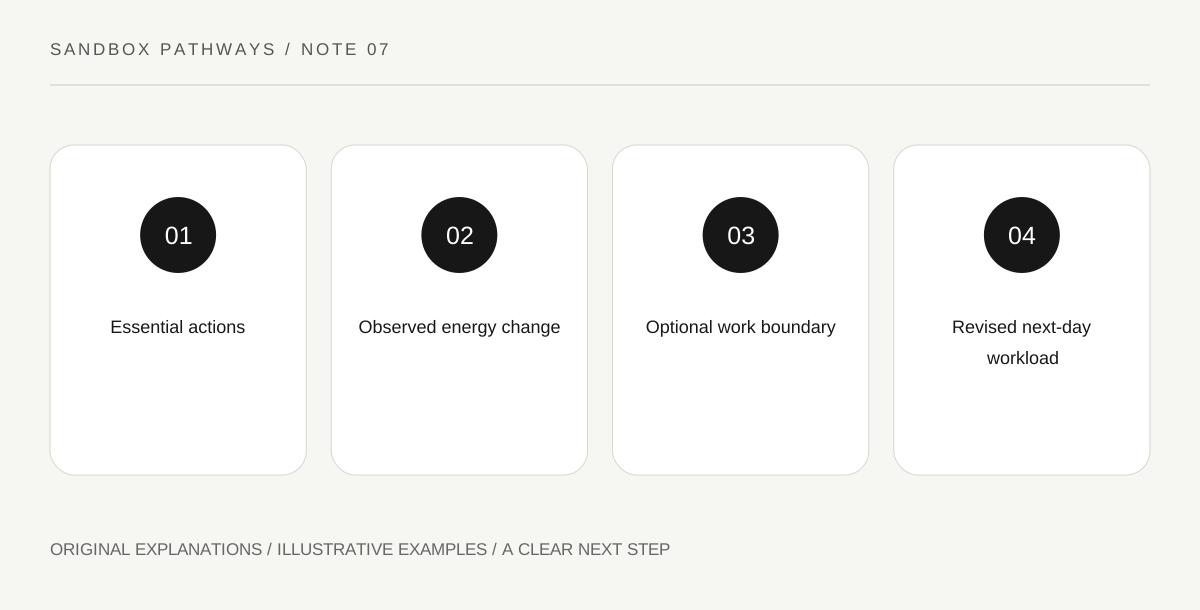
Original explanatory diagram. Read the full method and limitations below.
Read three resources independently
Energy, health and clock time answer different questions in Stardew Valley. An energy problem is not automatically a health problem, and a long-looking afternoon does not replenish the energy bar. Begin the exercise by identifying each display before starting heavy work. The energy reference describes tool-related depletion and exhaustion as a distinct state. Your task is to recognize the relevant resource before it becomes the limiting factor. On a notebook page, make separate columns for time left, energy available and the job still required. Do not turn these into one vague rating such as doing fine.
Reserve the essential work first
Choose one necessary action block, such as maintaining the crop area already planted, before adding optional clearing. Work on a manageable section and inspect the energy bar afterward. Use the observed change in your own save to estimate the next section instead of copying a universal count of tool swings. Tools, actions and character conditions can differ. A useful beginner practice is to mark a stopping point before starting: finish this patch, then reassess. That creates a decision boundary while you still have options. Clearing the entire property is not required to make a day productive.
Check food information before consuming
The reference explains that food can affect energy and that not every edible-looking item restores it. Read the item’s displayed effect rather than assuming any inventory object solves depletion. Keep a deliberate supply if an outing depends on it, and separate food intended for energy from an item reserved for another goal. This is an in-game resource decision, not real dietary advice. In a practice session, compare the energy display before and after one known positive-energy item. Observe the result instead of repeatedly consuming things without understanding which resource changed or whether a separate status remains.
Recognize the cost of pushing past the limit
The energy page distinguishes warnings from actual exhaustion and explains that restoring energy above zero does not automatically erase every consequence of having become exhausted. The practical lesson is to react to the display before treating the last available action as free. If essential work is done and energy is low, choose a task whose requirements fit the remaining resources or end the work block. Review what caused the squeeze: too much optional clearing, too large a planting area or poor preparation for an outing. Change the next day’s workload rather than interpreting one strained day as a reason to optimize the whole farm at once.
Illustrative farm scenario
Imagine your crop maintenance is complete but a large stump-filled corner still looks untidy. Your farmer has little energy and there is afternoon time left. Instead of treating the clock as permission for unlimited clearing, stop the optional work and plan a smaller section tomorrow. The decision preserves a clear distinction between available time and the resource the next action consumes.
Practical checks
Optional checkboxes save only in this browser.
Questions that come up
Does time remaining mean enough energy remains?
No. These are separate resources. A task may be possible on the clock while poorly matched to the energy available.
Does eating automatically erase exhaustion?
Do not assume so. The reference distinguishes replenishing energy from curing the exhaustion state; inspect the actual status and relevant item effect.
References and scope
These sources support the factual background. Examples and exercises are original illustrative teaching material. References do not imply endorsement.
- Stardew Valley Wiki: energy — Energy as a tool-use resource distinct from time and health.