Terraria: let the housing query explain the room
A room that looks like a house may still fail Terraria’s NPC housing checks. Instead of rebuilding blindly, use the housing query and inspect the reported category. Separate frame, background walls, furnishings and usable space so each correction addresses an actual missing condition.
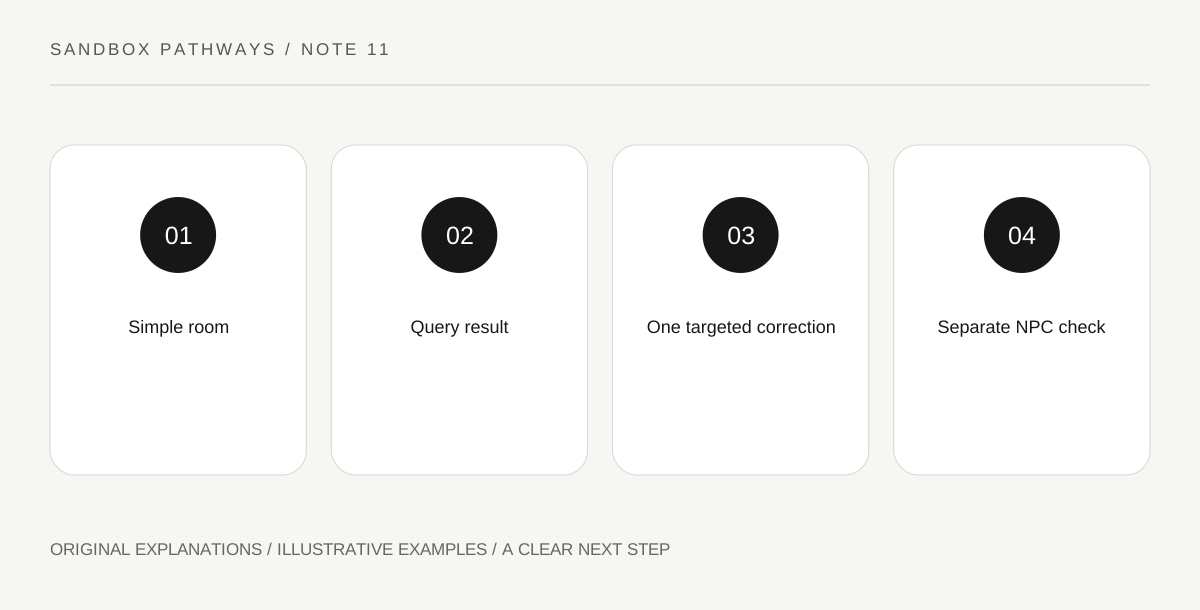
Original explanatory diagram. Read the full method and limitations below.
Build a simple room you can inspect
The housing reference describes room-size, enclosure, wall and furnishing conditions. For a first exercise, use a straightforward rectangular room with a solid outline and enough interior space to see what you placed. A simple design is easier to diagnose than an irregular decorative structure. Keep a standing area clear and avoid filling the entire floor with objects. Do not assume that a visually enclosed cave automatically has suitable background walls. Foreground blocks and background walls have different roles in the game. Inspect the interior deliberately before treating a roof, floor and two sides as a complete NPC home.
Check furnishing roles separately
The reference groups required furnishings into light, table or surface, chair or comfort, and entrance-related categories, with eligible examples and exceptions. For a beginner test, use familiar basic furniture rather than trying to exploit an unusual object’s category. A work bench, chair, torch and conventional entrance arrangement make the intended roles easy to recognize. Place each where it does not prevent useful standing space or movement. The exercise is about satisfying distinct functions, not simply increasing the total number of objects. Adding three more lamps cannot substitute for a missing furnishing role if the query identifies that role as absent.
Read the query as a diagnostic result
Use the game’s housing query for the actual room, following the controls on your platform. Write down the reported reason before changing the build. If it reports a missing wall, inspect that issue; if it reports missing furniture, check the relevant category. Change one thing and query again. This is faster to learn from than expanding the room, replacing all walls and moving furniture simultaneously. The exact message is evidence about the room state at that moment. Preserve it in a short note so you can connect the successful correction to the problem it actually addressed.
Distinguish valid housing from immediate arrival
A suitable room and an NPC moving in immediately are different questions. NPC availability can depend on its own conditions, so do not keep dismantling a room merely because no one arrives the instant the query approves it. Mark housing suitability as one completed check and investigate the intended NPC’s requirements separately. Also recheck after later renovations: removing a wall or altering usable space can change validity. A room is a maintained game structure, not a permanent achievement certified by its first appearance. Keep decorative improvements small enough that you can test what changed after each one.
Query each independent room separately after a multi-room renovation.
Illustrative building exercise
Build an illustrative room with an eight-by-eight outer footprint, appropriate background walls, a clear solid-floor standing area and basic furnishings. Query it. If the game reports missing furniture, inspect furnishing roles before enlarging the footprint. Once it reports suitable housing, stop changing the room and treat any remaining NPC-arrival question as a separate investigation.
Practical checks
Optional checkboxes save only in this browser.
Questions that come up
Does a torch alone make a room suitable?
No. Light is one requirement among several. The room’s other structural, wall, furnishing and placement conditions still matter.
Should I rebuild when no NPC arrives immediately?
First query the room. If housing is suitable, check the intended NPC’s separate conditions rather than repeatedly changing a validated room.
References and scope
These sources support the factual background. Examples and exercises are original illustrative teaching material. References do not imply endorsement.
- Official Terraria Wiki: house — Housing query and basic room-validity categories, read through indexed official-wiki content.