Terraria: separate pickaxe power from mining speed
A tool can be better at reaching a new block threshold without being the fastest choice for every ordinary block. Terraria’s pickaxe information distinguishes power and mining speed. Read both before replacing a tool simply because one number or combat statistic looks larger.
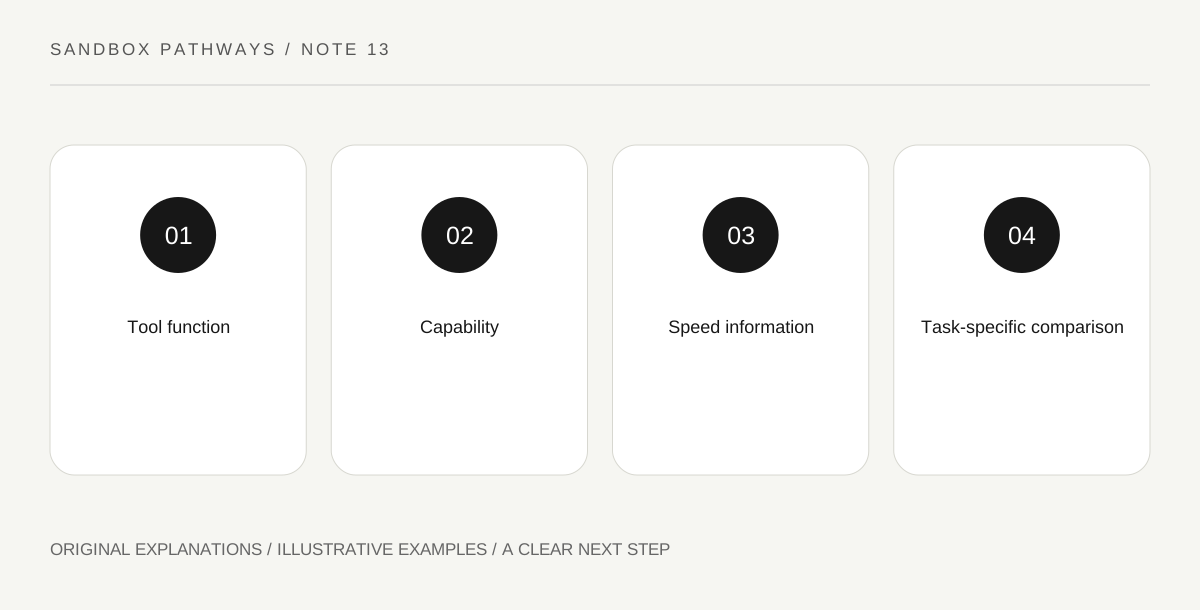
Original explanatory diagram. Read the full method and limitations below.
Identify the tool’s actual job
The pickaxe reference distinguishes mining blocks from removing background walls or chopping trees, which use different tool functions. Start by asking what you are trying to affect. If you use the wrong tool category, comparing mining statistics will not solve the problem. In an early practice area, choose an ordinary block, a tree and a background wall as separate observations. Follow the appropriate tools rather than assuming one stronger-looking item handles all three. This basic classification prevents a failed interaction from being misread as proof that every nearby block requires a late-game upgrade.
Read power as a separate property
Pickaxe power relates to mining capability, including whether certain blocks can be mined. A higher displayed power figure is not the same statement as every block being removed faster in every situation. Keep a capability field separate from a speed field in your comparison. If a block cannot currently be mined, identify the actual block and relevant requirement rather than swinging indefinitely. This is a progression question. If it can be mined but feels slow, that is a different observation. The distinction lets you ask the right question before investing resources in a replacement.
Do not use combat damage as a shortcut
A pickaxe can also function as a basic weapon, but weapon damage and mining performance are different properties. Likewise, an animation-related figure is not necessarily the mining interval you intended to compare. Read the named statistic rather than selecting the largest number on the item. For a paper exercise, make three columns for mining capability, mining speed and combat information. Place each stated property in its own column. This keeps a combat improvement from being described as a mining upgrade without supporting evidence. The item may improve in more than one way, but those improvements need separate explanations.
Compare on one repeatable block
If you want to understand a practical speed difference, choose the same ordinary block type in a controlled in-game area and compare tools under the same conditions. Do not claim a universal benchmark from a few swings. The point is to connect the tool’s description with one observed task. Keep modifiers and other active effects visible in your note because they can change a comparison. Then decide whether your current goal is access to a new material or faster routine excavation. Those goals can justify different choices. A useful upgrade decision begins with the job, not with a blanket assumption that the newest available item replaces every older one.
Illustrative building exercise
An illustrative comparison finds tool A can mine the ordinary blocks needed for a building project, while tool B adds access to a different material. Do not call B faster at the building task merely from its power figure. Check the speed-related information or compare the same block under matching conditions. Capability and routine speed answer different questions.
Practical checks
Optional checkboxes save only in this browser.
Questions that come up
Does higher power always mean fastest on every block?
No. The reference distinguishes power and mining speed. Evaluate the specific block and task.
Can a pickaxe remove every background wall?
Pickaxes and hammers have different functions. Use the tool appropriate to the object you are trying to change.
References and scope
These sources support the factual background. Examples and exercises are original illustrative teaching material. References do not imply endorsement.
- Official Terraria Wiki: pickaxes — Pickaxe power versus mining speed and distinctions among tool functions.