Terraria: test an arena before summoning a boss
An arena is a movement space built for a particular challenge. Before adding elaborate support items or summoning anything, test whether your character can actually use its platforms. A short dry run reveals awkward jumps, blind turns and blocked routes while you still have time to change them.
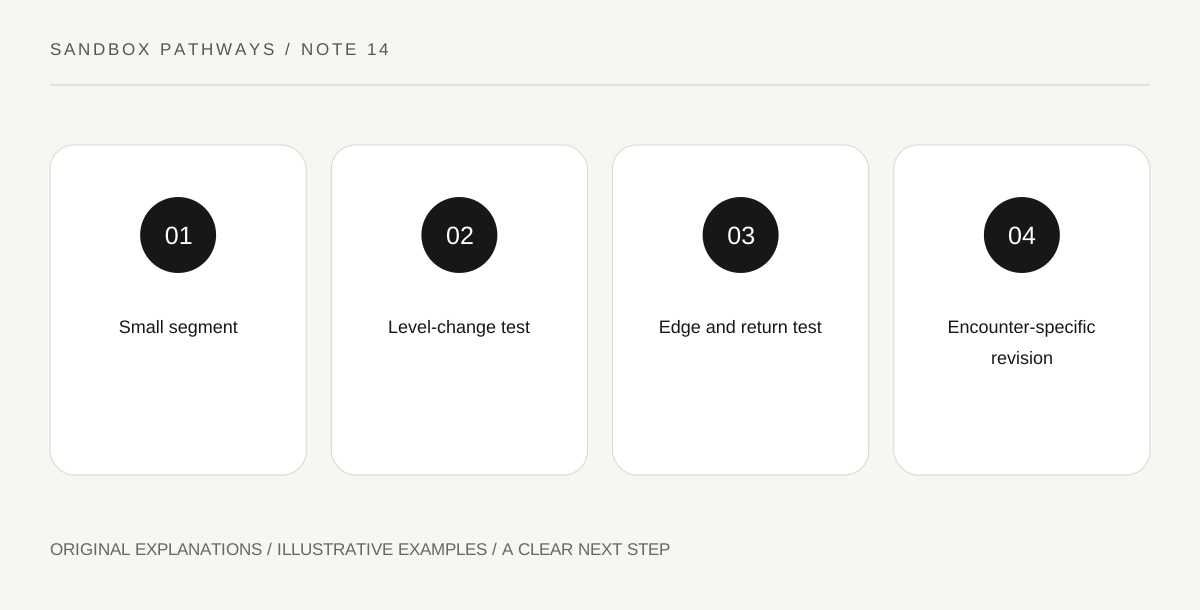
Original explanatory diagram. Read the full method and limitations below.
Define a movement question
The official wiki’s arena guide describes varied arena forms and notes that bosses can need different layouts. It is a revisable strategy guide, not a universal blueprint. Choose one limited test: can you traverse this section, change levels and return without getting caught? Build a modest practice segment using the movement equipment you currently have. Do not copy a late-game gap merely because it appears in a screenshot. The character’s actual jump and movement capabilities are part of the layout. A useful arena begins with a task the space supports, rather than a decorative image of how a boss area should look.
Test level changes deliberately
Run across the lower route, move to the next level and descend again using your platform’s supported controls. Notice where you hesitate or collide. Keep the selected equipment the same during the first test so the layout remains the variable being studied. If a jump barely works while calm, ask whether you want that precision requirement during a fight. You can revise spacing or simplify the route without claiming one exact dimension is correct for every encounter. The dry run turns an abstract platform diagram into a route you personally understand through movement.
Leave the edges understandable
Test what happens when you reach each end of the prepared area. A route that works through its middle can fail when you turn, drop into rough terrain or encounter a nearby obstruction. Mark the useful boundaries visually and keep access from your usual approach clear. Also consider the relationship with NPC housing rather than assuming the arena and home must occupy the same crowded space. The guide discusses separating arenas from bases. Your exercise should make the movement area legible and leave room for later encounter-specific decisions, without treating a tidy rectangle as complete protection from every boss.
Add support after the route works
Support furniture and buffs can be useful, but they do not fix a platform transition you cannot perform reliably. Add them after the movement route has a clear purpose, then retest if placement affects your path. Before an actual encounter, consult its own conditions and behavior; some bosses require distinct terrain or locations. This introductory guide teaches a dry-run method rather than a guaranteed victory setup. After a fight, revise one feature tied to an observed problem. A specific note such as the upper turn trapped me points toward a change, while a vague demand for a bigger arena may only enlarge the same confusion.
Illustrative building exercise
In an illustrative dry run, you can move right across two platform rows but cannot comfortably return from the upper row. Change the troublesome transition and test both directions before summoning anything. The exercise succeeds when the route becomes understandable, even though boss-specific requirements and combat preparation still need separate attention.
Practical checks
Optional checkboxes save only in this browser.
Questions that come up
Is one platform layout suitable for all bosses?
No. The arena guide discusses different encounter needs. A generic movement space is a starting exercise, not a universal solution.
Can support furniture replace movement practice?
No. It serves another function. A useful support effect does not make an awkward jump or blocked turn disappear.
References and scope
These sources support the factual background. Examples and exercises are original illustrative teaching material. References do not imply endorsement.
- Official Terraria Wiki: arena — Platform movement spaces and boss-specific arena needs; guide revision status acknowledged.