Minecraft: diagnose a furnace by its three jobs
A furnace has a simple transformation to perform, but several different missing conditions can make it appear idle. Read the input, fuel and result separately. A small controlled smelting task is easier to understand than repeatedly swapping every item in the interface.
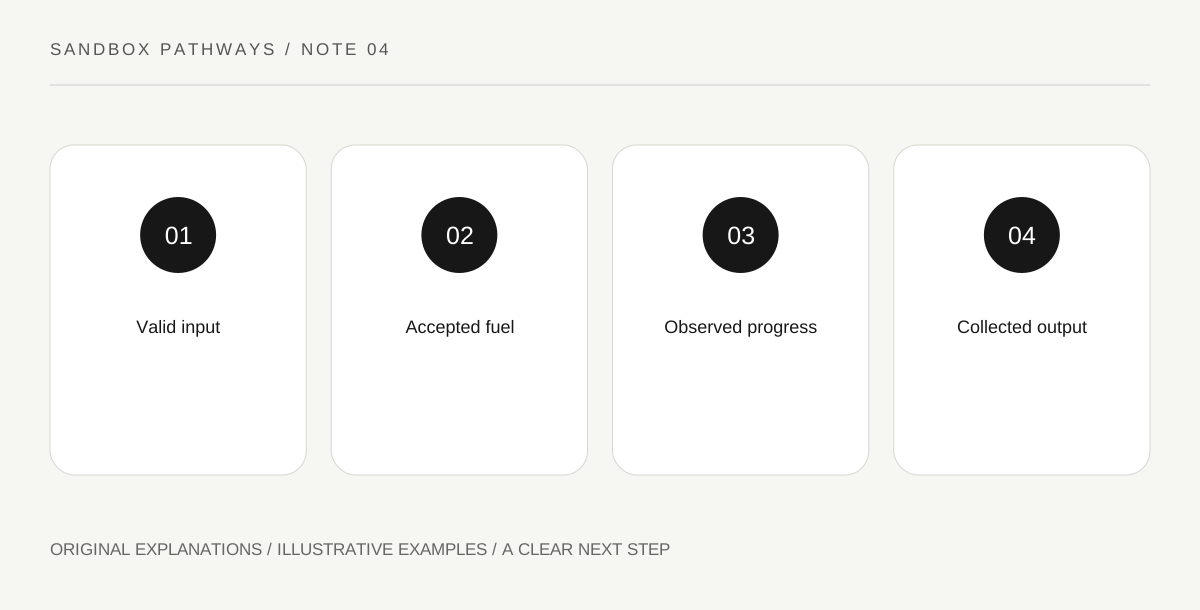
Original explanatory diagram. Read the full method and limitations below.
Identify a valid transformation
The official furnace article describes fuel plus an item to be processed yielding a result after progress completes. Start with one transformation known to the game rather than placing arbitrary objects into slots. Read the current interface and recipe information for your edition. Some familiar crafting tasks happen elsewhere, so the mere idea that an object needs heat is not enough. Your goal is to identify a valid input and expected output first. Write those names down if helpful. This gives you a clear expectation against which to compare what the furnace actually does.
Separate supply from fuel
The item being processed and the item providing fuel have different jobs. Inspect their positions independently instead of treating the interface as a general storage box. For a practice run, use a small batch and a fuel type the game accepts. You do not need an elaborate fuel-efficiency calculation to understand the first operation. If nothing progresses, ask which job is unsatisfied: input, fuel or an available result space. Changing one condition at a time makes the effect visible. A valid fuel cannot turn an invalid processing item into a valid recipe, and a valid input cannot supply its own fuel automatically.
Watch the result rather than only the animation
A burning appearance or progress indicator is useful feedback, but the practical task is obtaining the expected output. Check the result area and move completed items deliberately. Distinguish a working process from a completed batch. If you interrupt your observation to explore, return and inspect all three jobs rather than assuming the furnace failed or finished. In a learning notebook, record input placed, fuel supplied and output collected. Those three short entries make a repeat attempt much easier to diagnose than a vague memory that something was burning when you left.
Choose a batch with a purpose
Before processing everything you carry, decide what the next task needs. A small purposeful batch preserves flexibility while you learn. Keep construction materials separate from processing materials so that an experiment does not consume the supplies for another plan. Once one transformation is understood, compare a second supported transformation and note what stays the same about the interface. The reusable skill is reading the process state, not memorizing an animation. Fuel choice and later automation can become separate lessons after the basic input-fuel-output relationship is clear. Avoid changing machines and materials simultaneously when trying to understand one missing condition.
If the expected transformation remains unclear, stop the batch and identify the recipe before spending more fuel.
Illustrative practice scenario
In an illustrative test, you place a valid processing item but leave fuel absent. Identify that single missing job, add accepted fuel and observe progress and output. On a second test, check the expected result before making a larger batch. The comparison teaches a condition-based diagnosis without attributing every idle furnace to the same cause.
Practical checks
Optional checkboxes save only in this browser.
Questions that come up
Can the furnace make every crafted item?
No. Some tasks belong to other interfaces or recipes. Use the game’s actual transformation information rather than a real-world heat analogy.
Does a burning indicator prove the entire batch is collected?
No. Inspect and collect the result separately. Process activity, completion and collection are different observations.
References and scope
These sources support the factual background. Examples and exercises are original illustrative teaching material. References do not imply endorsement.
- Minecraft: furnace — Furnace input, fuel and output concepts.